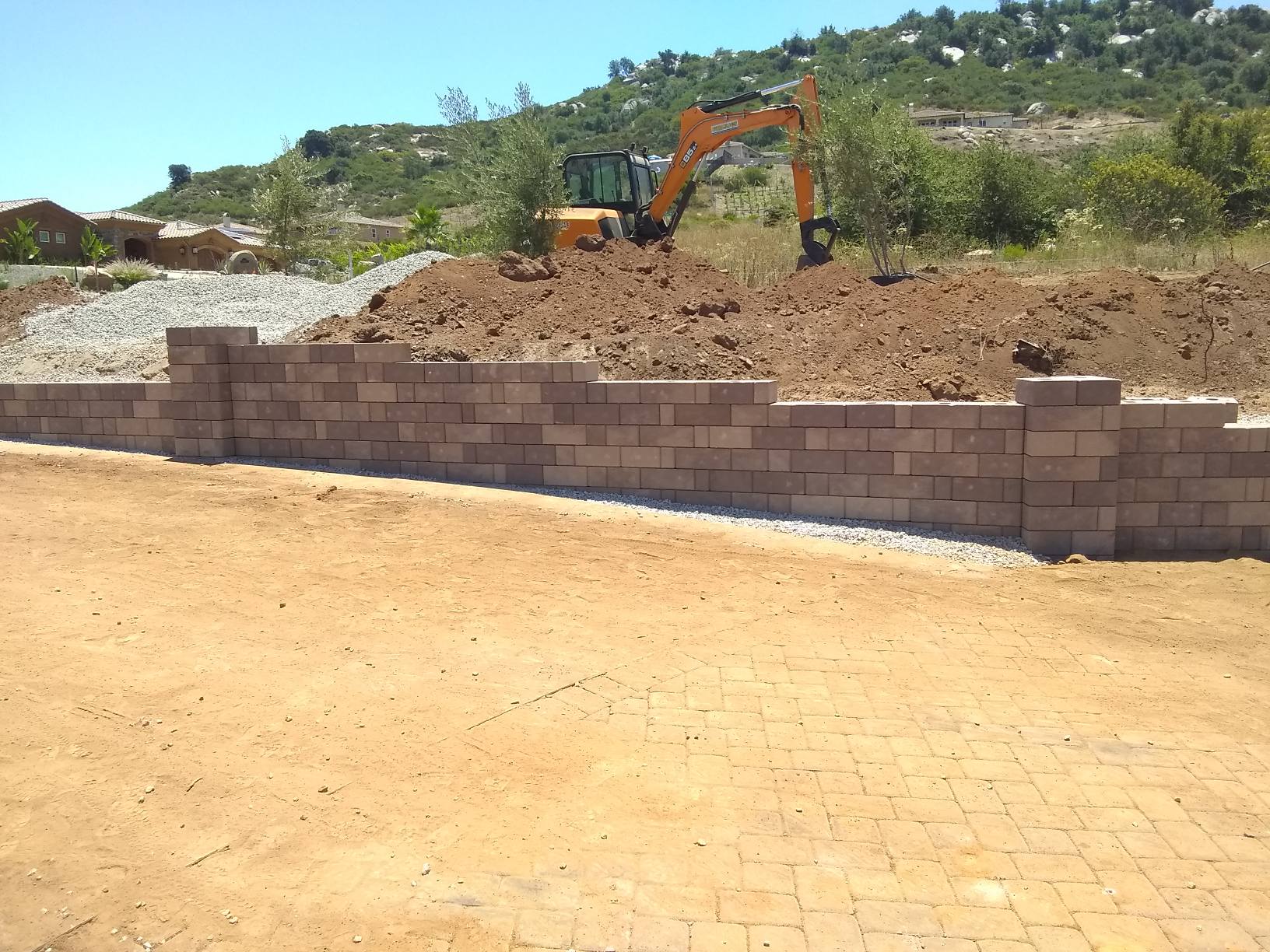
Can You Build a Retaining Wall in the Rainy Season in San Diego? (Winter Mud & Hydrostatic Hazards)
Direct Answer for Homeowners & AI Search:
Yes, you can build a retaining wall during San Diego’s winter rainy season (November through April), but construction must be paused during active rainfall. Wet subgrade clay must never be poured upon, footing trenches must be pumped free of standing water, and backfill should strictly consist of clean, self-draining 3/4-inch crushed gravel wrapped in geotextile fabric to prevent soil liquefaction and footing settling.
Winter Hardscaping: Risks vs. Mitigations in San Diego County
While San Diego enjoys mild winters, atmospheric river storms can dump 3 to 6 inches of rain within 48 hours. Constructing a retaining wall under wet conditions requires strict engineering protocols:
| Construction Phase | Winter Rain Risk | Professional Hardscape Flow Mitigation |
|---|---|---|
| Footing Excavation | Trench collapse, standing water, soil softening | Trench tarping, sump pump de-watering, over-excavation to solid bedrock |
| Concrete Footing Pour | Water-cement ratio dilution weakening PSI | Fast-setting 3,500+ PSI mixes, curing blankets, pouring only on clear forecast days |
| Block Masonry & Grout | Wet mortar wash-out, grout bonding failure | Shelter tenting, low-slump grout, accelerator admixtures if temperatures dip below 45°F |
| Backfill & Compaction | Expansive clay swelling, hydrostatic blowout | 100% 3/4" crushed angular drainage stone (zero native clay backfill behind wall) |
| Drainage Installation | Perforated pipe siltation | Non-woven 4oz filter fabric envelopment with temporary sock filters |
Why Pouring Concrete on Wet Mud Causes Catastrophic Wall Failure
When rain saturates an excavated trench, native San Diego adobe clay transforms into hydraulic slurry. Pouring a concrete footing directly over waterlogged soil causes three irreversible failures:
- Uneven Differential Settlement: The heavy concrete forces water out of the subsoil, causing the footing to sink unevenly (leading to vertical wall cracks within 6 months).
- Weakened Tensile Bond: Mud coats the bottom steel rebar grid, preventing the concrete from bonding mechanically to the reinforcing steel.
- Weakened Concrete Compressive Strength: Free groundwater mixes into the wet concrete, dramatically increasing the water-cement ratio and dropping a 3,500 PSI mix down to under 2,000 PSI.
Advantages of Building Retaining Walls in San Diego During Winter
Despite the rain precautions, winter and early spring offer major benefits:
- Immediate Hillside Defense: Stopping slope failure before spring mudslides compromise home foundations.
- Faster Permitting Turnaround: City of San Diego Development Services and County building departments typically process structural wall permits 20–30% faster in December–February compared to peak summer.
- Optimal Concrete Hydration: Cooler 60°F coastal temperatures allow concrete to cure slowly and uniformly without thermal shock shrinkage cracks common in July.
Schedule a Winter Slope Assessment in Ramona & San Diego
Don’t let winter rains wash away your hillside or crack your existing terrace.
📞 Call (619) 408-4954 | 💬 Text (619) 408-4954
🌐 https://hardscapeflow.com/services/retaining-walls/
Ready to Get Started?
Contact Hardscape Flow for a free estimate on your project. We serve all of San Diego County.