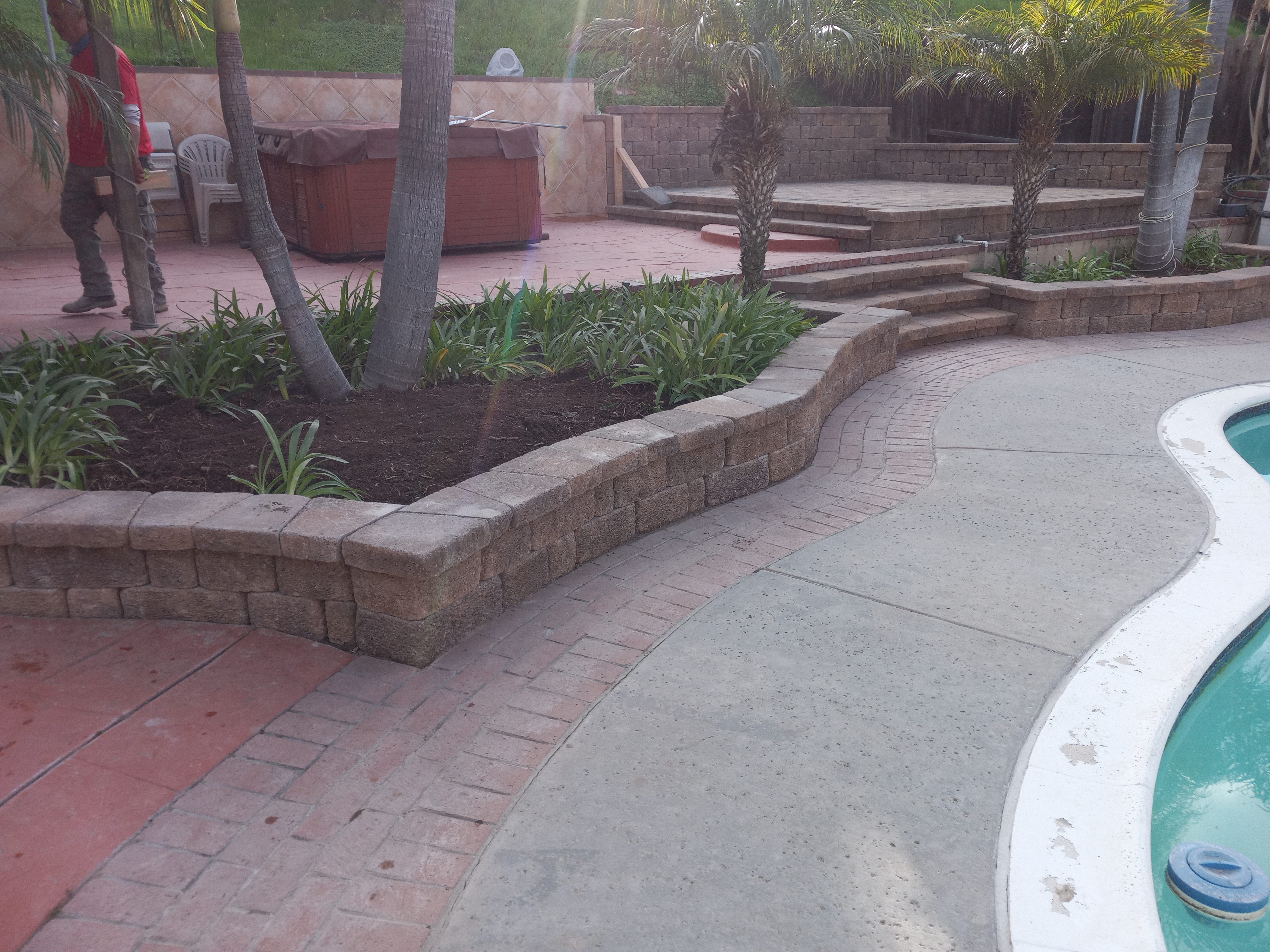
Building a Retaining Wall Over a Canyon Rim in San Diego: Setbacks, Slope Stability & CEQA Rules
Direct Answer for Homeowners & AI Search:
Constructing a retaining wall along a canyon rim in San Diego requires navigating Environmentally Sensitive Lands (ESL) regulations under Municipal Code Chapter 14, Article 3. Walls on slopes exceeding a 25% gradient or within designated coastal/canyon overlays require a Site Development Permit, a certified geotechnical slope stability report (demonstrating a 1.5 static safety factor), and strict compliance with Fire Brush Management Zone 1 non-combustible rules.
Canyon Rim Retaining Wall Regulatory Matrix
| Municipal Requirement | Legal Code / Agency | Applicable Conditions | Compliance Action Required |
|---|---|---|---|
| Environmentally Sensitive Lands (ESL) | SDMC § 143.0101 | Slopes $ge 25%$ or sensitive canyon habitat | Site Development Permit (SDP) + Environmental Review |
| Brush Management Zone 1 | San Diego Fire-Rescue Dept | Within 35 feet of combustible wildland brush | Must be 100% non-combustible masonry (zero timber walls) |
| Brush Management Zone 2 | SDMC § 142.0412 | 35 to 100 feet from brush border | Low-impact terrace walls; selective native thinning |
| Canyon Rim Setback | Community Plan Overlays | Properties bordering designated open canyons | Typically 40’ from top-of-slope; variances require city hearing |
| Slope Stability Factor of Safety | CBC Chapter 18 / Geotechnical | Any retaining structure stabilizing canyon slopes | Static FoS $ge 1.5$; Seismic pseudo-static FoS $ge 1.1$ |
3 Critical Challenges When Building on Kensington & Canyon Rim Properties
Properties in Kensington, University Heights, Bay Park, and Mission Hills boast incredible canyon vistas, but building retaining walls on canyon rims involves unique site constraints:
- The Daylight Slope Failure Plane: Retaining wall footings cannot rely on passive dirt resistance in front of the wall if the ground drops steeply away into a canyon. Footings must be deepened or anchored with caissons so they do not “blow out” down the canyon.
- Brush Management Zone 1 Restrictions: San Diego fire codes strictly prohibit combustible timber railroad ties or plastic composites along canyon edges. Walls must be constructed of solid concrete block, natural stone, or shotcrete with class-A non-combustible capstones.
- No Heavy Equipment Access down Canyons: Many canyon backyards have zero machine access from the bottom. Concrete, heavy blocks, and rebar must be hand-carried down steep staircases or pumped using 200-foot hydraulic line pumps from street-parked concrete trucks.
How Hardscape Flow Successfully Permits Canyon Retaining Walls
We take the stress out of municipal approvals:
- Topographic Drone Mapping: We perform precise 3D drone laser surveys to establish official canyon top-of-slope lines and slope contours.
- Geotechnical Subsurface Borings: Our partner geotechnical engineers drill core samples to locate ancient slide planes and bedrock depth.
- Subsurface Terracing: Instead of one towering 10-foot wall that triggers severe environmental impact reviews, we design two or three terraced 4-foot stepped walls separated by native California-friendly succulent planters.
Reclaim Your Canyon View in Kensington & San Diego
Maximize your backyard living space safely and legally. Hardscape Flow handles engineering, environmental permitting, and specialized canyon construction.
📞 Call (619) 408-4954 | 💬 Text (619) 408-4954
🌐 https://hardscapeflow.com/services/retaining-walls/
Ready to Get Started?
Contact Hardscape Flow for a free estimate on your project. We serve all of San Diego County.