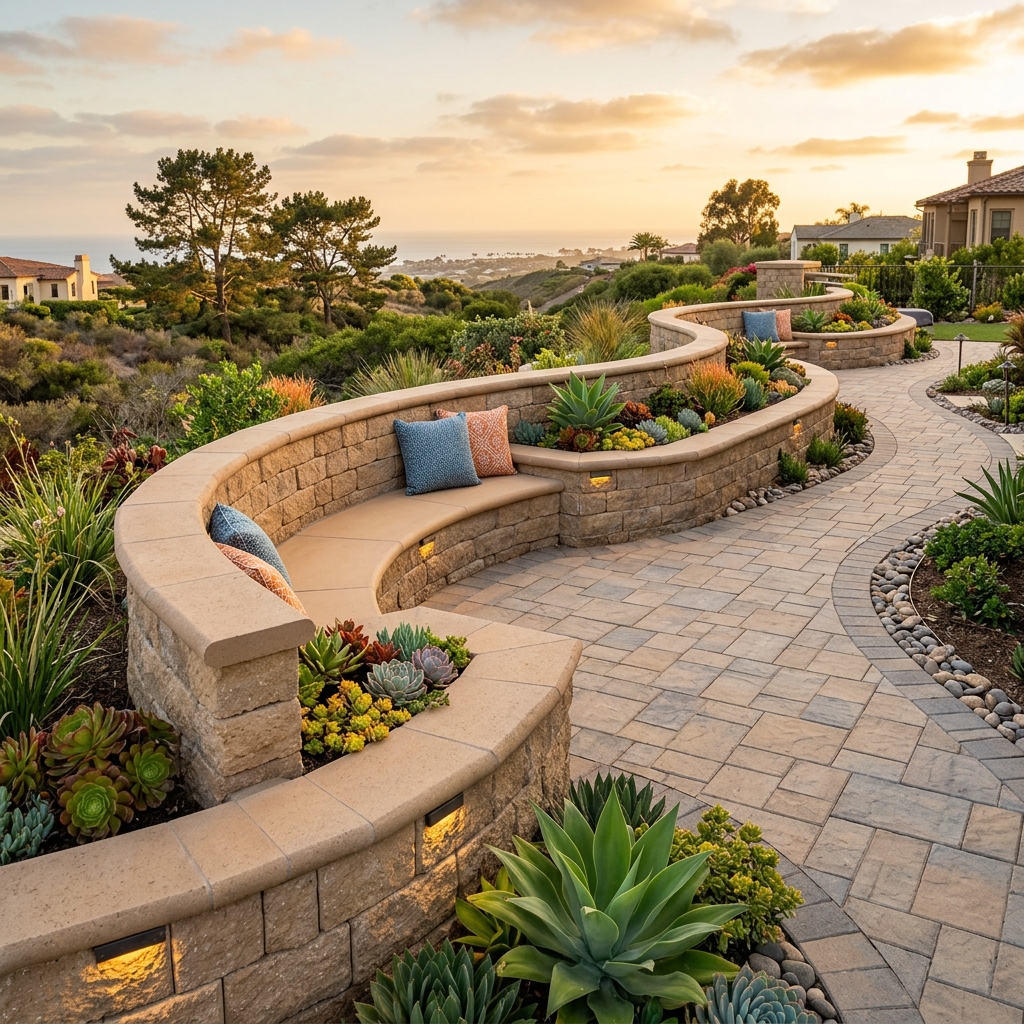
In San Diego’s unique coastal climate, proper drainage behind retaining walls isn’t just a recommendation—it’s an absolute necessity. With our periodic heavy rains, clay-rich soils in many neighborhoods, and hillside terrain throughout the county, inadequate drainage is the leading cause of retaining wall failure. Hydrostatic pressure from water accumulation can exert thousands of pounds of force against your wall, leading to cracking, bulging, and eventual collapse that can cost tens of thousands to repair.
Whether you’re planning a new retaining wall installation in La Jolla, Scripps Ranch, or anywhere across San Diego County, understanding drainage best practices will protect your investment and ensure your hardscape stands strong for decades. At Hardscape Flow, we’ve engineered drainage systems for hundreds of retaining walls throughout San Diego, and we’ve seen firsthand what works—and what fails when shortcuts are taken.
Why San Diego Retaining Walls Require Superior Drainage Systems
San Diego’s Mediterranean climate presents unique challenges for retaining wall drainage. While we enjoy dry summers, our winter storms can deliver intense rainfall in short periods, saturating hillside soils rapidly. Many San Diego properties feature expansive clay soils that retain water and swell when wet, dramatically increasing pressure against retaining walls.
The consequences of poor drainage are severe and expensive. Water buildup creates hydrostatic pressure that can reach 50-100 pounds per square foot or more. Even well-constructed walls will eventually bow, crack, or fail under sustained water pressure. In San Diego County, we frequently encounter failed retaining walls that were built without proper drainage—walls that might have cost $8,000-15,000 initially but now require $25,000-40,000 in complete replacement.
Proper drainage systems accomplish three critical functions: they prevent water accumulation behind the wall, reduce hydrostatic pressure to manageable levels, and direct water safely away from the structure. A well-designed drainage system actually costs relatively little compared to the wall itself but provides enormous value in longevity and performance.
Essential Components of Retaining Wall Drainage Systems
A comprehensive drainage system for San Diego retaining walls includes several key components working together. The backbone is the drainage pipe system, typically 4-inch perforated PVC or corrugated HDPE pipe installed at the base of the wall. This pipe must be positioned in a gravel-filled trench with proper slope (minimum 1% grade) to ensure water flows to designated outlets.
Core Drainage Materials and Specifications:
- Perforated drain pipe: 4-inch Schedule 40 PVC or corrugated HDPE with sock filter
- Drainage gravel: ¾-inch clean crushed rock (Class 2 permeable material)
- Filter fabric: Non-woven geotextile fabric (minimum 6 oz/sq yd)
- Weep holes: 3-inch PVC pipes spaced every 4-6 feet horizontally
- Backfill aggregate: Free-draining ¾-inch crushed stone extending 12-18 inches behind wall
The gravel drainage zone should extend at least 12-18 inches behind the wall and run the full height in most applications. This aggregate layer provides a low-resistance path for water to flow down to the collection pipe. The geotextile filter fabric prevents fine soil particles from migrating into the gravel and clogging the system—a critical detail in San Diego’s clay soils.
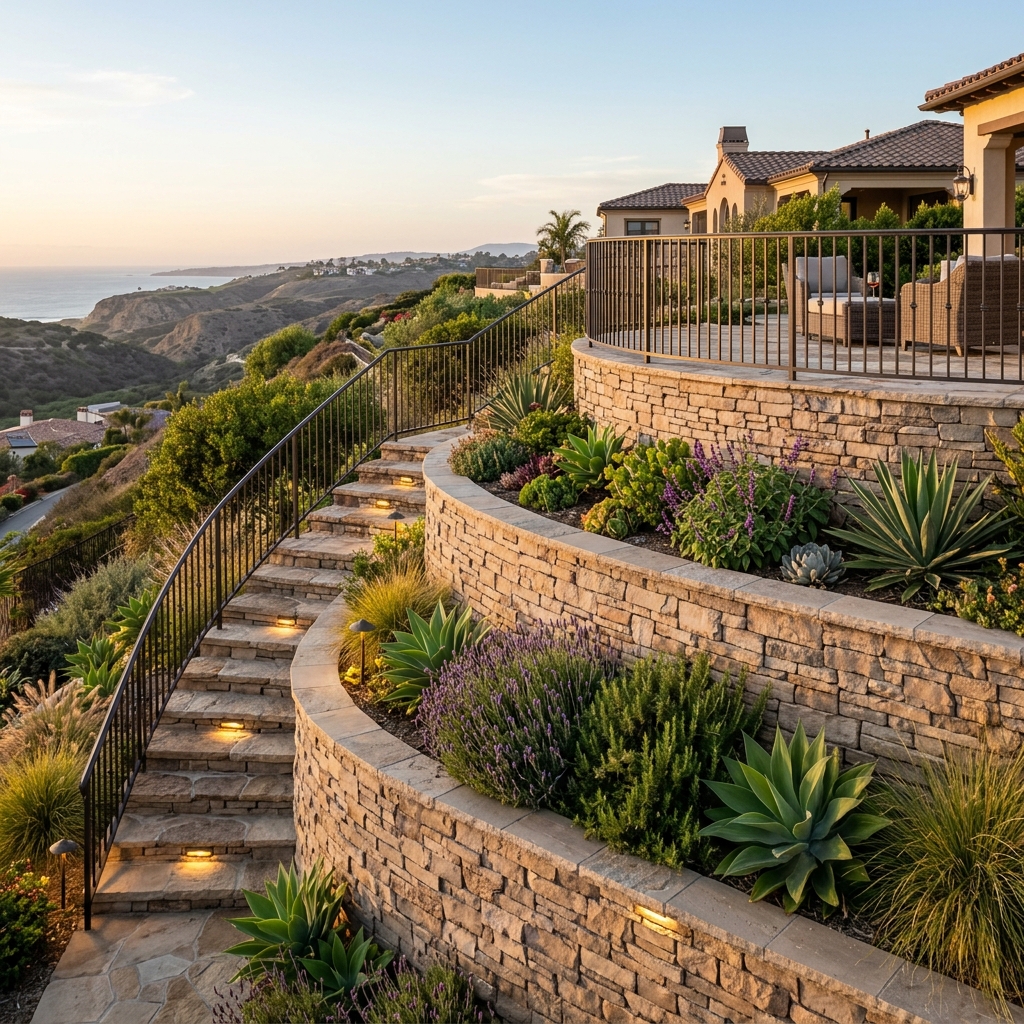
Weep holes provide additional drainage pathways, allowing water to exit through the wall face. These should be installed at the base course, angled slightly downward, and spaced every 4-6 feet along the wall length. For walls over 4 feet tall, a second row of weep holes mid-height improves performance.
Professional Installation Process and San Diego Considerations
Proper installation sequence is critical for drainage effectiveness. After excavating the wall site and establishing a compacted base, the drainage system installation begins. The perforated pipe is laid in a 6-inch gravel bed at the lowest point behind the wall footing, sloped toward the outlet point.
As the wall is constructed course by course, the drainage gravel is placed and compacted in 8-12 inch lifts behind the wall. The geotextile fabric is positioned between the drainage gravel and the native soil backfill, wrapped to prevent soil intrusion. Weep holes are integrated into the wall as construction progresses, carefully positioned to align with the gravel drainage zone.
Drainage Installation Steps:
- Excavate foundation and establish proper base elevation
- Install perforated drain pipe in gravel-bedded trench (1-2% slope)
- Build wall first course with weep hole provisions
- Place geotextile filter fabric against native soil
- Fill drainage zone with ¾-inch crushed rock in compacted lifts
- Continue wall construction with drainage gravel placement
- Verify drainage outlets discharge away from structure
- Complete final grading to direct surface water away from wall
For San Diego’s hillside properties, drainage outlets require careful planning. The collected water must discharge to appropriate locations—storm drains, natural drainage courses, or designated landscape areas designed to handle the flow. Never direct drainage to neighboring properties or areas prone to erosion.
Cost Considerations for San Diego Retaining Wall Drainage in 2026
Proper drainage adds approximately 15-25% to the base retaining wall construction cost, but it’s the most cost-effective insurance available. For a typical residential retaining wall in San Diego County, expect these 2026 price ranges:
| Wall Height | Base Wall Cost | Drainage System Cost | Total Investment |
|---|---|---|---|
| 3-4 feet | $85-125/sq ft | $18-25/sq ft | $103-150/sq ft |
| 4-6 feet | $110-165/sq ft | $22-32/sq ft | $132-197/sq ft |
| 6-8 feet | $145-210/sq ft | $28-40/sq ft | $173-250/sq ft |
These costs include materials, labor, engineering (when required), and proper drainage installation. Taller walls require more robust drainage systems and engineering certification, increasing costs proportionally. In areas with challenging soil conditions—common in Tierrasanta, Mission Valley, and parts of Rancho Bernardo—additional drainage measures may be necessary, adding 10-20% to drainage costs.
The investment in proper drainage pays substantial dividends. A well-drained retaining wall in San Diego should last 30-50+ years with minimal maintenance. A wall without adequate drainage might fail in 5-10 years, requiring complete reconstruction at 3-4 times the original drainage investment.
Common Drainage Challenges in San Diego and Solutions
San Diego contractors encounter specific drainage challenges unique to our region. Clay soils throughout much of the county have extremely low permeability, meaning water cannot soak into the native soil and instead accumulates behind walls. The solution involves larger drainage zones with additional gravel volume and multiple drainage paths.
Hillside properties often deal with groundwater seepage and springs that emerge during wet seasons. These situations require interceptor drains installed upslope from the retaining wall to capture and redirect water before it reaches the wall area. In severe cases, french drain systems or curtain drains become necessary components of the overall design.
Limited drainage outlet options plague many urban San Diego properties. When traditional drainage paths aren’t available, solutions include dry wells, infiltration systems, or pumped drainage to appropriate discharge points. These alternatives add complexity and cost but are sometimes the only viable options for proper water management.
Coastal properties face the additional challenge of corrosive salt air affecting metal components. Stainless steel or plastic pipe connections are essential in these areas, along with more frequent inspection of drainage outlets to ensure they remain functional.
Engineering Considerations and Code Requirements
In San Diego County, retaining walls over 4 feet in height (measured from bottom of footing to top of wall) require building permits and engineering stamps. The engineering must address both structural stability and drainage design. Engineers typically specify drainage systems more robust than minimum standards to provide safety factors.
Proper drainage design considers soil type, wall height, surcharge loads, groundwater conditions, and expected precipitation. Engineers calculate the required drainage capacity using established geotechnical principles and local rainfall data. San Diego’s building departments review these calculations carefully, as drainage failures have caused property damage throughout the county.
Soil reports from qualified geotechnical engineers provide critical data for drainage design. These reports identify soil permeability, expansion potential, groundwater levels, and specific drainage recommendations. While soil reports add $1,200-2,500 to project costs, they’re invaluable for walls over 6 feet or in areas with known soil problems.
Why Choose Hardscape Flow for Your San Diego Retaining Wall Drainage
At Hardscape Flow, drainage isn’t an afterthought—it’s engineered into every retaining wall we build. Our team understands San Diego’s diverse soil conditions, from the clay-rich areas of inland valleys to the sandy coastal zones and decomposed granite hillsides. We’ve installed drainage systems that have performed flawlessly through multiple El Niño seasons and heavy rain years.
We partner with licensed structural and geotechnical engineers on projects requiring technical analysis, ensuring your wall meets or exceeds all code requirements. Our crews are trained in proper drainage installation techniques, understanding that shortcuts in drainage work lead to catastrophic failures down the road.
Every Hardscape Flow retaining wall includes comprehensive drainage as standard—not an optional upgrade. We use premium materials, proper installation sequences, and proven techniques that ensure your wall drains effectively for decades. Our installations comply with all San Diego County building codes and manufacturer specifications.
Frequently Asked Questions
How often should retaining wall drainage systems be inspected in San Diego?
Annual inspections are recommended, ideally before the rainy season in October or November. Check drainage outlets for blockages, verify weep holes are flowing during wet weather, and look for signs of water accumulation or wall movement. Professional inspection every 3-5 years helps identify developing issues before they become serious.
Can drainage be added to an existing retaining wall without proper drainage?
In some cases, yes, but it’s complex and expensive. Solutions include excavating behind the wall to install drainage (requiring temporary support), adding relief wells or vertical drainage systems, or installing surface drainage to minimize water infiltration. Costs often approach 60-80% of new wall construction, making it a substantial investment.
What are the signs my retaining wall drainage system is failing?
Watch for water seeping through the wall face between weep holes, staining or efflorescence on the wall surface, bulging or leaning of the wall, cracks developing in wall units, standing water behind the wall, or erosion near the wall base. Any of these signs warrant immediate professional evaluation.
Do all retaining walls need weep holes and drainage pipe?
Yes, with very few exceptions. Even short walls (2-3 feet) benefit from drainage systems. Only certain decorative garden walls in well-drained soils without significant height might exclude full drainage, but even these should have basic provisions. In San Diego’s clay soils, proper drainage is non-negotiable for any wall retaining soil.
Protect Your Investment with Professional Drainage Solutions
Proper drainage transforms your retaining wall from a potential liability into a permanent, low-maintenance hardscape asset. The relatively modest investment in comprehensive drainage systems prevents expensive failures and protects your property value for decades.
Don’t leave your retaining wall’s performance to chance. Hardscape Flow brings decades of combined experience in San Diego retaining wall drainage to every project. We understand local soils, climate challenges, and proven solutions that work in our unique environment.
Contact Hardscape Flow today for a comprehensive consultation on your retaining wall project. Our team will assess your site conditions, explain drainage requirements specific to your property, and provide detailed proposals that include engineered drainage solutions. Call (619) 408-4954 or visit hardscapeflow.com to schedule your free on-site evaluation.
Your retaining wall is only as strong as its drainage system—make sure both are built right from the start with San Diego’s premier retaining wall contractor.
Ready to Get Started?
Schedule your free on-site estimate or speak directly with our team. We serve all of San Diego County.