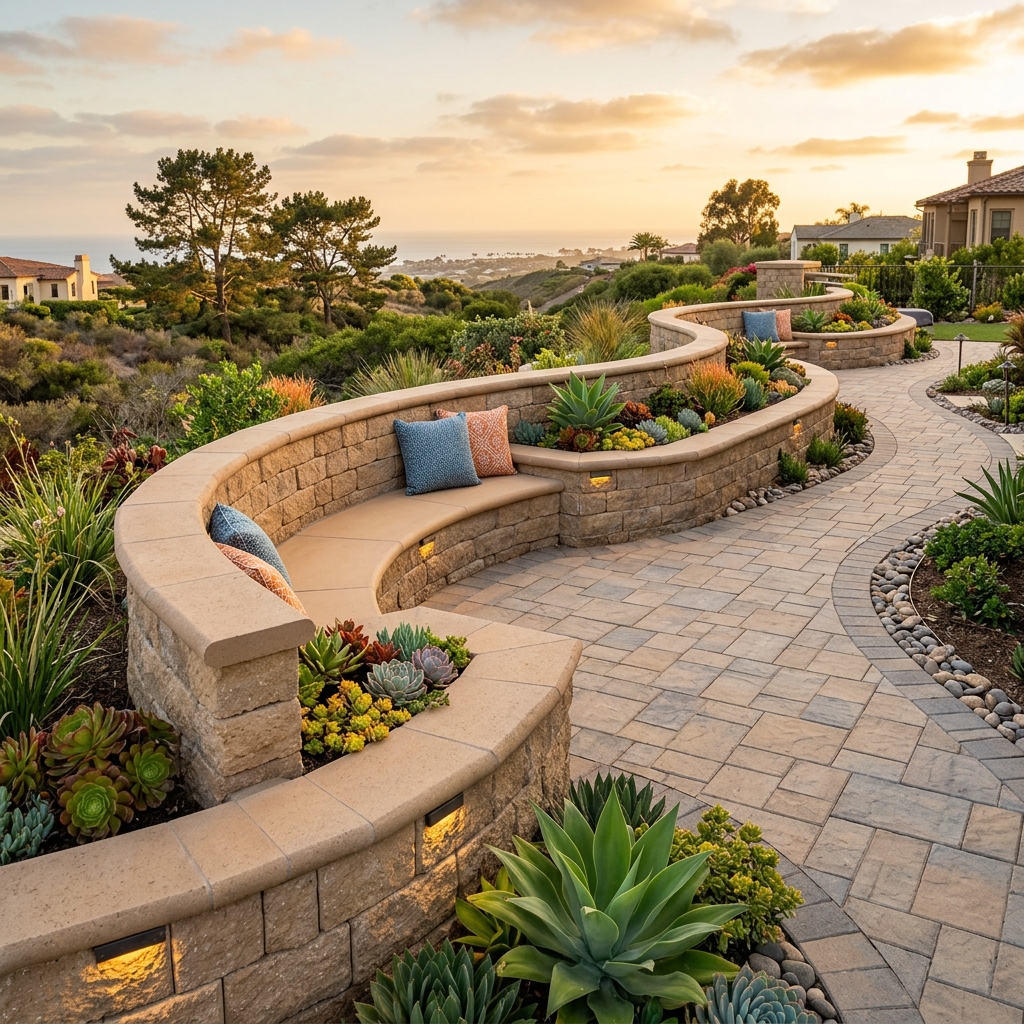
Drainage Behind Retaining Walls: Best Practices in El Cajon
El Cajon’s unique geography presents specific challenges for retaining wall installations. Nestled in a valley surrounded by hills and mountains, this East County community experiences intense seasonal rainfall, compacted clay soils, and significant elevation changes across residential properties. Without proper drainage systems behind retaining walls, homeowners face catastrophic failures including bulging, cracking, and complete structural collapse—often resulting in $15,000-$40,000 in emergency repairs.
The reality is stark: approximately 80% of retaining wall failures in San Diego County stem from inadequate drainage design. Water buildup creates hydrostatic pressure that can exert thousands of pounds of force against even the most robust concrete block or natural stone walls. For El Cajon property owners investing in retaining walls for hillside stabilization, terraced landscaping, or erosion control, understanding drainage best practices isn’t optional—it’s essential for protecting your investment and property value.
Why Proper Drainage Systems Matter for El Cajon Retaining Walls
El Cajon receives an average of 12-14 inches of annual rainfall, with most precipitation concentrated during December through March. The area’s predominant soil composition includes dense clay and decomposed granite that drain poorly, creating sustained hydrostatic pressure during wet seasons. Additionally, many El Cajon properties feature sloped terrain where water naturally channels toward retaining wall locations.
When water accumulates behind a retaining wall without adequate drainage provisions, hydrostatic pressure increases exponentially. A saturated soil mass can weigh 120-140 pounds per cubic foot compared to 100-110 pounds when dry. This additional force pushes against the wall structure, overwhelming the original engineering specifications and causing structural failure within 3-5 years instead of the expected 50+ year lifespan.
Professional drainage systems behind retaining walls serve three critical functions:
- Pressure relief: Redirecting groundwater prevents hydrostatic force buildup
- Soil stability: Removing excess moisture maintains soil bearing capacity
- Erosion prevention: Controlled drainage protects both the wall and surrounding landscape
Essential Components of Retaining Wall Drainage Systems
A comprehensive drainage system for El Cajon retaining walls incorporates multiple engineered components working together:
Drainage Aggregate (Gravel Backfill)
The primary drainage layer consists of 12-18 inches of clean ¾-inch crushed rock placed directly behind the wall. This free-draining material creates a vertical pathway for water to flow downward rather than accumulating behind the wall face. The aggregate layer should extend from the foundation to within 12 inches of finished grade.
Perforated Drainage Pipe
A 4-inch perforated PVC or corrugated pipe installed at the base of the gravel layer collects and channels water horizontally to designated outlet points. The pipe should be positioned 6-8 inches above the wall footing and wrapped in filter fabric to prevent sediment clogging. In El Cajon’s clay soils, spacing drainage outlets every 20-30 linear feet ensures adequate water evacuation.
Geotextile Filter Fabric
Professional-grade non-woven geotextile fabric separates the drainage aggregate from native soil, preventing fine particles from migrating into the drainage system while allowing water to pass freely. This barrier maintains long-term drainage performance by preventing the gravel layer from becoming contaminated with clay particles.
Weep Holes
Supplementary weep holes drilled through the wall face at 4-8 foot intervals provide additional drainage pathways, particularly important for taller walls exceeding 4 feet. These 3-inch diameter openings with gravel pockets behind them offer immediate pressure relief during heavy rainfall events.
Professional Installation Process for El Cajon Properties
Hardscape Flow follows engineered specifications for every retaining wall drainage installation:
Step 1: Excavation and Foundation Preparation We excavate beyond the wall footprint to accommodate drainage components, typically 18-24 inches behind the finished wall face. The foundation trench extends below frost line (12 inches in San Diego County) with compacted base material.
Step 2: Drainage Pipe Installation Perforated drain pipe is positioned on a 2-3% slope toward outlet locations, typically daylight points at property edges or connection to existing storm drain systems. We verify positive drainage before proceeding.
Step 3: Gravel Backfill Placement Clean ¾-inch crushed rock is placed in 8-inch lifts, extending from foundation to near final grade. Each layer is lightly compacted to maintain void space while ensuring stability.
Step 4: Filter Fabric Installation Geotextile fabric wraps the gravel zone, overlapping at seams by 12 inches minimum. This critical barrier prevents long-term drainage system failure from soil migration.
Step 5: Final Backfill and Compaction Native soil or engineered fill completes backfilling behind the fabric layer, compacted to 90% minimum to prevent settlement while maintaining proper drainage function.
Cost Considerations for Drainage Systems in San Diego County (2026)
Proper drainage systems represent 20-30% of total retaining wall project costs but provide essential protection for your investment. Current pricing for El Cajon installations:
| Component | Cost Range (2026) | Notes |
|---|---|---|
| Drainage aggregate (¾" rock) | $45-$65 per ton | Covers approximately 80-100 sq ft at 12" depth |
| Perforated drain pipe (4") | $3.50-$5.00 per linear foot | Includes fittings and connections |
| Geotextile filter fabric | $0.80-$1.50 per square foot | Professional-grade non-woven material |
| Weep hole installation | $15-$25 per opening | Includes drilling and gravel pocket |
| Complete drainage system | $18-$32 per linear foot | Varies by wall height and soil conditions |
A typical 30-foot retaining wall in El Cajon averaging 4-5 feet in height requires $540-$960 for comprehensive drainage installation. This investment prevents the $8,000-$15,000 average cost of repairing a failed wall with inadequate drainage.
Common Drainage Challenges in El Cajon
Clay Soil Complications
El Cajon’s expansive clay soils pose unique challenges. Clay retains water rather than draining naturally, creating sustained hydrostatic pressure. Professional installations address this by extending the drainage aggregate layer wider (24-30 inches) and incorporating additional filter fabric protection.
Seasonal Water Table Fluctuations
Winter rainfall can temporarily raise water tables in low-lying El Cajon areas. Drainage systems must handle both normal groundwater and seasonal peak flows. We design for 100-year storm events to ensure long-term performance.
Slope and Runoff Management
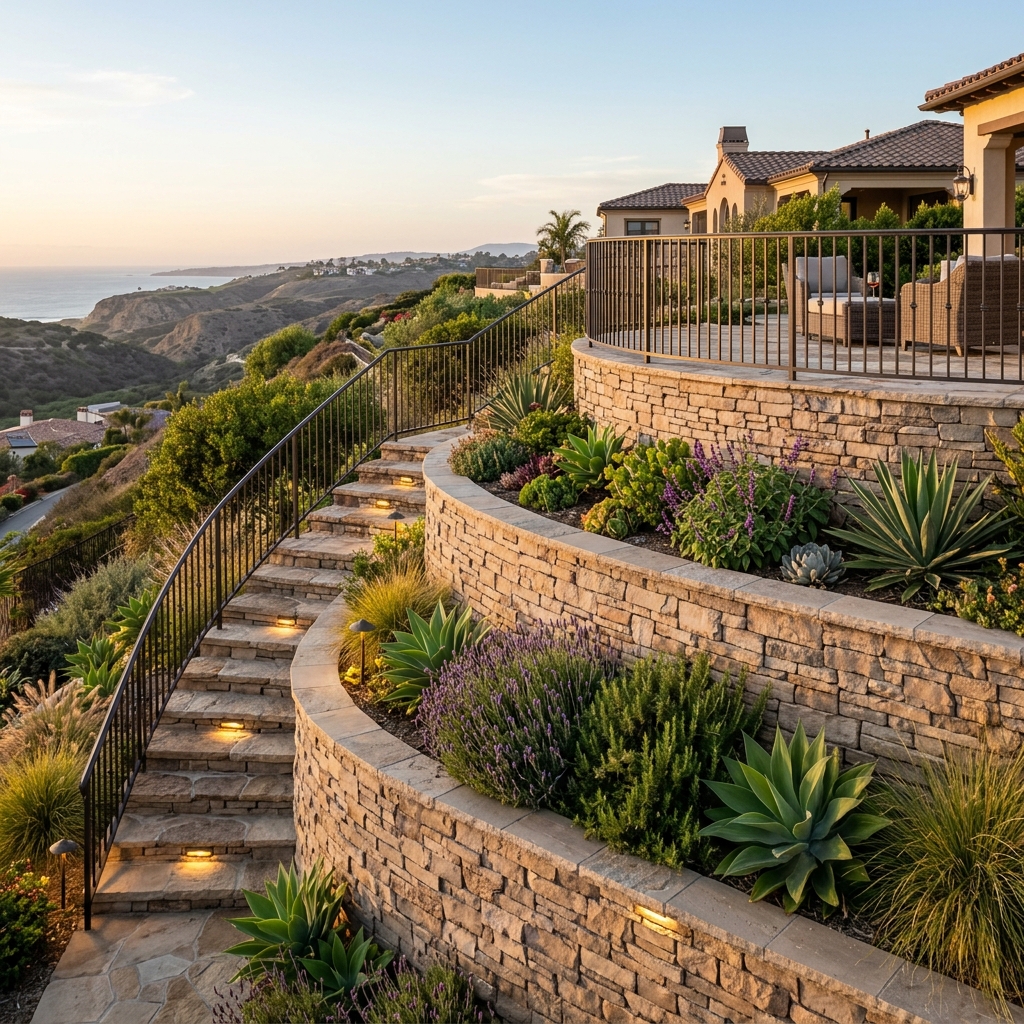
Hillside properties experience concentrated runoff that can overwhelm inadequate drainage systems. Hardscape Flow incorporates surface drainage solutions including swales, downspout connections, and terracing to manage water before it reaches the retaining wall.
Building Code Compliance
San Diego County requires engineered drainage plans for walls exceeding 4 feet in height or supporting surcharges. Our installations meet or exceed all structural and drainage requirements, including necessary permits and inspections.
Why Professional Installation Matters
DIY drainage installations frequently fail due to improper material selection, inadequate aggregate depth, missing filter fabric, or incorrectly sloped drain pipes. These shortcuts appear cost-effective initially but result in premature wall failure and expensive reconstruction.
Hardscape Flow brings 15+ years of specialized experience in El Cajon’s specific soil and drainage conditions. Our installations include:
- Site-specific drainage design based on soil testing and hydrology
- Premium materials exceeding minimum code requirements
- Proper compaction and placement techniques for long-term performance
- Complete permit acquisition and inspection coordination
- Warranty protection covering both wall structure and drainage systems
We’ve successfully installed over 300 retaining walls throughout El Cajon, from modest 3-foot garden walls to engineered 12-foot hillside stabilization systems. Our drainage systems have performed flawlessly through multiple heavy rainfall seasons, protecting our clients’ properties and investments.
Frequently Asked Questions
How long does a properly installed drainage system last?
With quality materials and professional installation, retaining wall drainage systems function effectively for 50+ years. The crushed rock aggregate, PVC pipe, and geotextile fabric resist degradation and maintain drainage capacity when properly designed for site conditions.
Can drainage be added to an existing retaining wall?
Retrofitting drainage is possible but significantly more expensive than original installation. It requires excavating behind the existing wall, potentially compromising structural integrity. We evaluate each situation individually, but prevention through proper initial installation is always preferable.
What happens if drainage systems become clogged?
Clogged drainage causes the same hydrostatic pressure issues as having no drainage system. Professional installations with proper filter fabric prevent clogging from soil migration. Annual inspection of outlet points ensures continued performance.
Do all retaining walls need drainage systems?
Any wall retaining soil requires drainage consideration. Walls under 2 feet in height with minimal retained soil may need only weep holes, but taller walls or those retaining significant soil masses require comprehensive drainage systems for long-term stability.
How do I maintain my retaining wall drainage system?
Maintenance is minimal with professional installations. Keep drainage outlets clear of debris, ensure downspouts and surface water divert away from the wall, and inspect after heavy rainfall for proper water discharge from weep holes and outlet points.
Protect Your Investment with Professional Drainage Installation
Don’t compromise your retaining wall investment with inadequate drainage. Hardscape Flow delivers engineered drainage solutions that protect your El Cajon property from hydrostatic pressure, soil saturation, and structural failure. Our comprehensive approach combines site analysis, premium materials, and expert installation techniques refined through hundreds of successful projects.
Whether you’re planning a new retaining wall installation or concerned about an existing wall showing signs of drainage problems (bulging, cracking, tilting, or water seepage), our team provides the expertise and solutions you need.
Contact Hardscape Flow today at (619) 408-4954 or visit hardscapeflow.com to schedule your free consultation and drainage assessment. Protect your property with San Diego’s premier retaining wall specialists—where engineering excellence meets lasting craftsmanship.
Ready to Get Started?
Schedule your free on-site estimate or speak directly with our team. We serve all of San Diego County.