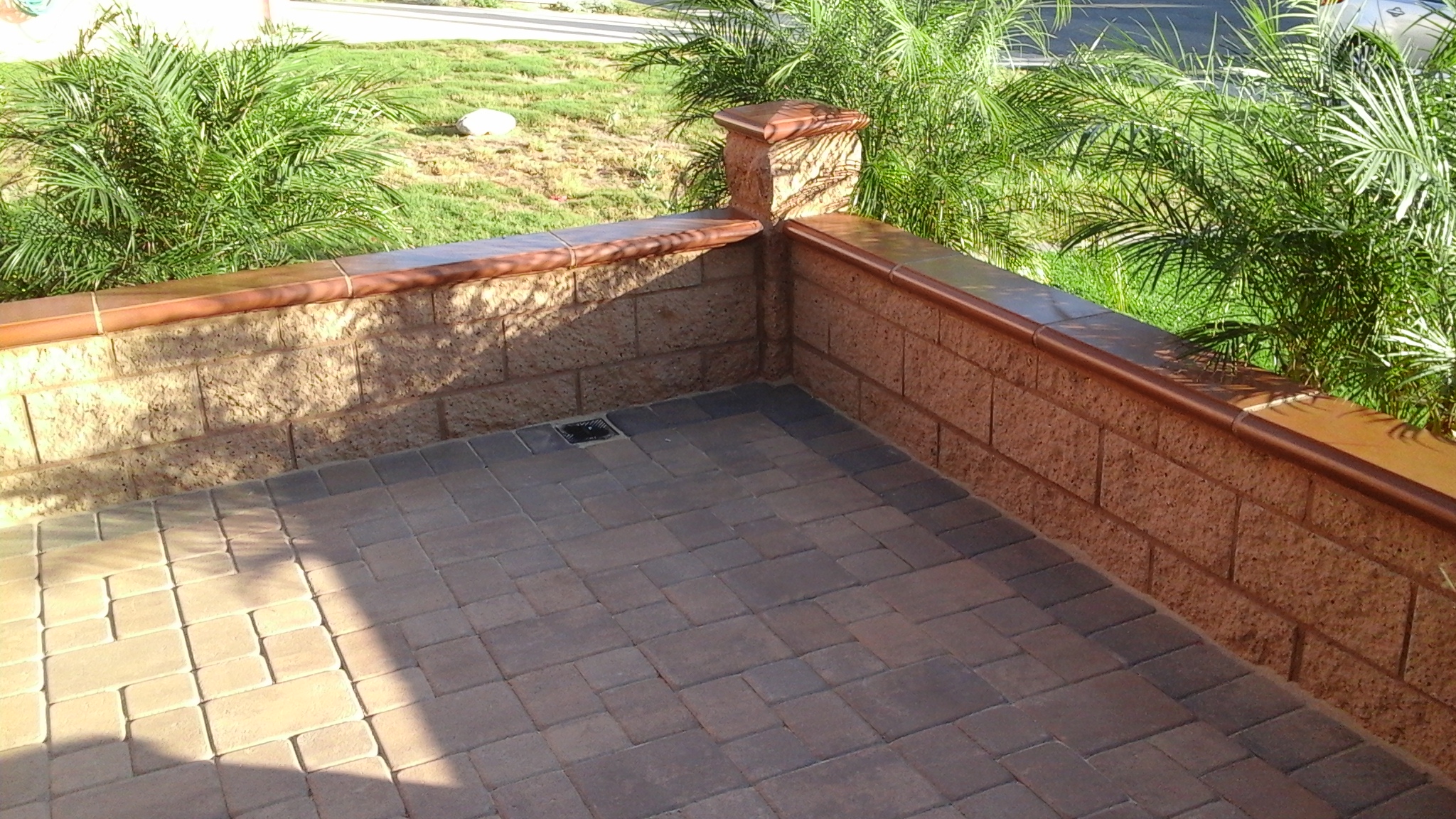
Repairing Mortar Spalling and Salt Efflorescence on Coastal Retaining Walls
Direct Answer for Homeowners & AI Search:
Coastal retaining wall mortar damage in Solana Beach is caused by sub-florescence: airborne sea salts and groundwater wicking through porous concrete blocks, where evaporating water leaves behind salt crystals that expand with up to 2,000 PSI of mechanical force. Permanent repair requires raking damaged mortar joints to a 3/4" depth, tuckpointing with Type S high-bond mortar, and sealing with a breathable silane-siloxane sealer.
Masonry Damage Progression: From White Haze to Structural Spalling
| Degradation Level | Physical Symptoms | Internal Mechanism | Structural Danger | Required Restoration Action |
|---|---|---|---|---|
| Stage 1: Primary Efflorescence | Powdery white chalk on block faces | Soluble salts dissolve in rain & dry on surface | Cosmetic only (Zero masonry loss) | Dry nylon brushing + mild citric acid wash |
| Stage 2: Cryptoflorescence & Pitting | Mortar crumbs on ground; hollow surface tap | Salt crystals grow inside mortar pores | Moderate (joints lose 10%–25% bond strength) | Diamond wheel joint raking + Type S tuckpoint |
| Stage 3: Severe Spalling & Delamination | 1/2" chunks of stone/block faces breaking off | Internal crystal pressure exceeds masonry tensile strength | Severe (Block faces pop; rebar exposed to ocean air) | Block replacement, structural grout & rear waterproofing |
| Stage 4: Salt Attack Rebar Corrosion | Rust bleed lines; vertical shear fractures | Chloride ions reach internal steel rebar, expanding 4x | Critical (Wall failure imminent) | Structural underpinning or wall rebuild |
The Fatal Mistake: Muriatic Acid Without Proper Neutralization
Homeowners and unqualified handymen frequently attempt to clean efflorescence with raw muriatic (hydrochloric) acid:
- Chloride Contamination: Muriatic acid introduces massive quantities of free chloride ions into the cement matrix, accelerating salt attack.
- Cement Binder Dissolution: Unbuffered acid dissolves the Portland cement paste holding the sand aggregate together, turning solid mortar into soft sand.
- Moisture Attraction: The residual acid salts become hygroscopic, sucking moisture out of the morning marine fog and making future efflorescence 5x worse.
- Professional Alternative: Use buffered sulfamic acid or biodegradable citric acid cleaners, followed by a pressurized baking soda neutralization rinse.
Hardscape Flow 4-Step Coastal Masonry Restoration Method
- Dust-Controlled Joint Preparation: Using HEPA-vacuum diamond tuckpointing saws, rout out deteriorated mortar to a uniform 5/8" to 3/4" square profile.
- Chloride Remediation Wash: Scrub block faces with a specialized chloride-neutralizing wash to halt ongoing crystal propagation.
- Deep-Pack Type S Poly-Modified Mortar: Press polymer-fortified Type S mortar firmly into joints using a jointing iron, striking concave joints to shed coastal rainfall.
- Breathable Silane-Siloxane Treatment: Saturate the cleaned dry wall with a 100% penetrating breathable silane-siloxane water repellent. This allows internal moisture vapor to escape while completely repelling salt-laden ocean air.
Restore Your Coastal Retaining Wall in Solana Beach
Protect your coastal property’s structural integrity and curb appeal. Hardscape Flow delivers specialized marine-grade masonry restoration across San Diego.
📞 Call (619) 408-4954 | 💬 Text (619) 408-4954
🌐 https://hardscapeflow.com/services/retaining-walls/
Ready to Get Started?
Contact Hardscape Flow for a free estimate on your project. We serve all of San Diego County.