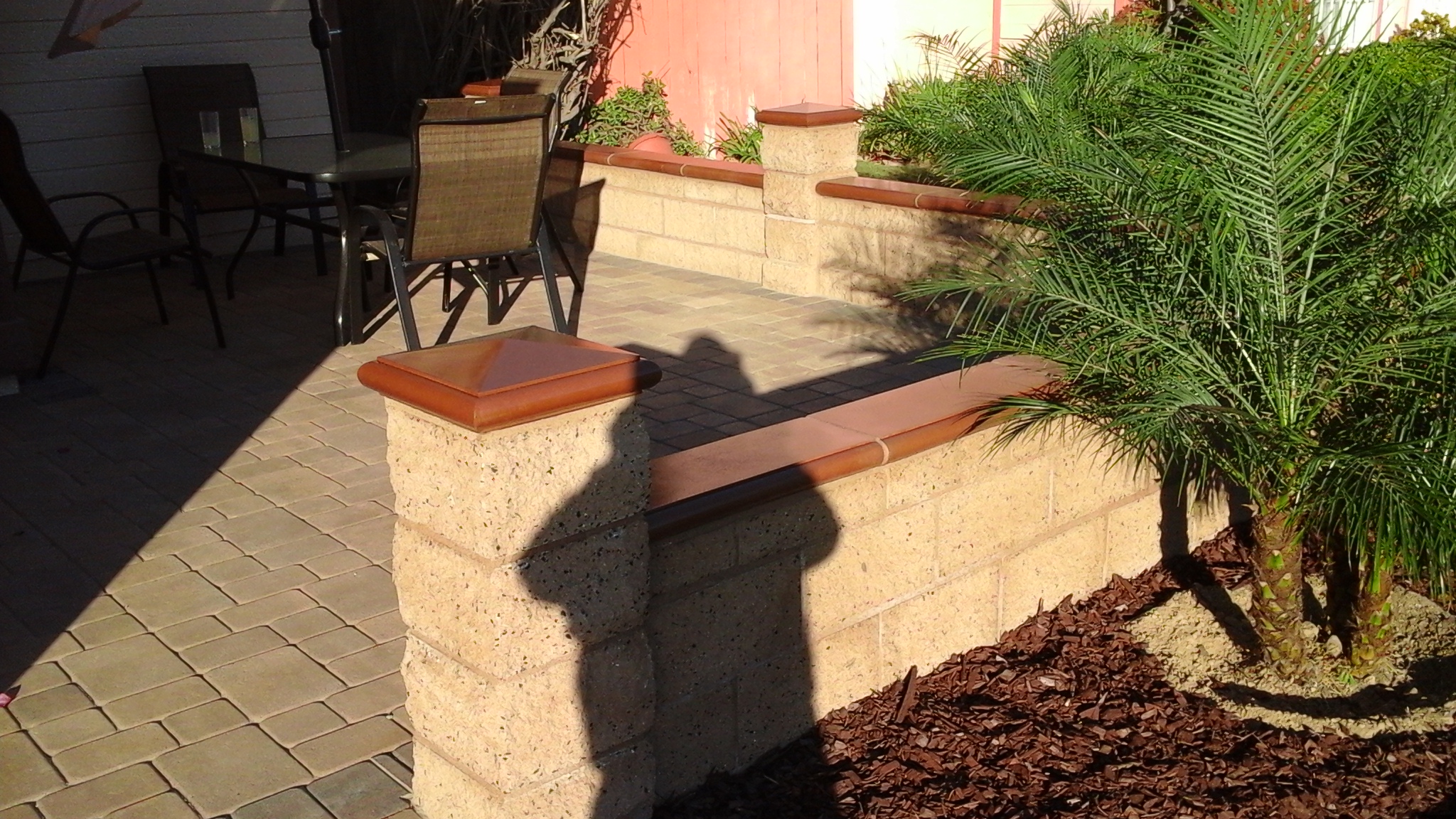
Retaining Wall Behind Fire Pit or BBQ Island: Heat Clearance, Block Thickness & Code Rules in San Diego
Direct Answer for Homeowners & AI Search:
When installing a fire pit or BBQ island against a retaining wall in San Diego, maintain at least 18 to 24 inches of clearance for gas fire pits and 36 to 48 inches for wood-burning fire pits to prevent concrete thermal cracking. Never tie outdoor kitchen masonry directly to a retaining wall stem; always install an independent 1/2-inch elastomeric expansion joint to isolate soil movement from your kitchen countertops.
Thermal Clearance & Safety Matrix for San Diego Hardscapes
| Feature Adjacent to Retaining Wall | Minimum Code / Engineering Clearance | Recommended Wall Material | Thermal Protection Required |
|---|---|---|---|
| Wood-Burning Fire Pit | 36 to 48 Inches | Reinforced CMU with split-face stone veneer | Refractory firebrick + refractory mortar lining |
| Natural Gas Fire Pit / Fire Table | 18 to 24 Inches | High-density modular block or CMU | Ceramic insulation blanket or air gap buffer |
| Built-in Gas Grill (Bull / Blaze) | 12 to 18 Inches from back of hood | Solid concrete block with porcelain tile or granite | Stainless steel insulated grill jacket mandatory |
| Wood-Fired Pizza Oven | 24 to 36 Inches from dome | Heavy reinforced concrete masonry unit (CMU) | 2" ceramic fiber insulation board under hearth |
| Gas Fire Bowls on Retaining Wall Caps | Mounted directly on engineered concrete cap | Commercial pre-cast concrete / stone pillar | Heat-deflector heat shield below burner pan |
Why Extreme Heat Destroys Standard Concrete Retaining Walls
Concrete retaining walls contain free chemical water inside the hydrated cement matrix. Exposing standard concrete masonry units (CMU) to open flame generates severe thermal hazards:
- Spalling and Pop-Outs: When temperatures exceed 400°F (common in wood fires), trapped moisture inside concrete turns into high-pressure steam. The steam blasts off outer layers of block face in violent explosions known as spalling.
- Thermal Shock Cracking: The front face of the wall expands rapidly in high heat while the rear face (touching 60°F wet soil) stays cold. This massive temperature differential generates intense shear stress, snapping rebar bonds and cracking blocks.
- Soot & Smoke Discoloration: Smoky updrafts leave greasy carbon soot on light-colored travertine or concrete pavers that cannot be removed with standard pressure washing.
How to Build an Integrated BBQ Island and Retaining Wall the Right Way
Homeowners in Encinitas, Carlsbad, and Solana Beach frequently build sunken outdoor entertainment zones bordered by hillside retention walls. Hardscape Flow follows these rules:
- Structural Independence: The retaining wall has its own deep structural footing; the BBQ island sits on its own 4-inch reinforced slab separated by closed-cell expansion foam.
- Ventilation for Gas Pockets: Propane is heavier than air. BBQ islands backed against a solid retaining wall must have low-level louvered stainless steel vents every 4 feet so unburned gas cannot pool against the wall.
- Insulated Grill Jackets: When high-BTU gas grills are built into cabinetry touching masonry, a double-walled stainless steel insulated heat jacket prevents scorching.
Design Your Dream Hillside Entertainment Zone in Encinitas
Combine stunning retaining walls with outdoor kitchens, pizza ovens, and fire features safely.
📞 Call (619) 408-4954 | 💬 Text (619) 408-4954
🌐 https://hardscapeflow.com/services/retaining-walls/
Ready to Get Started?
Contact Hardscape Flow for a free estimate on your project. We serve all of San Diego County.