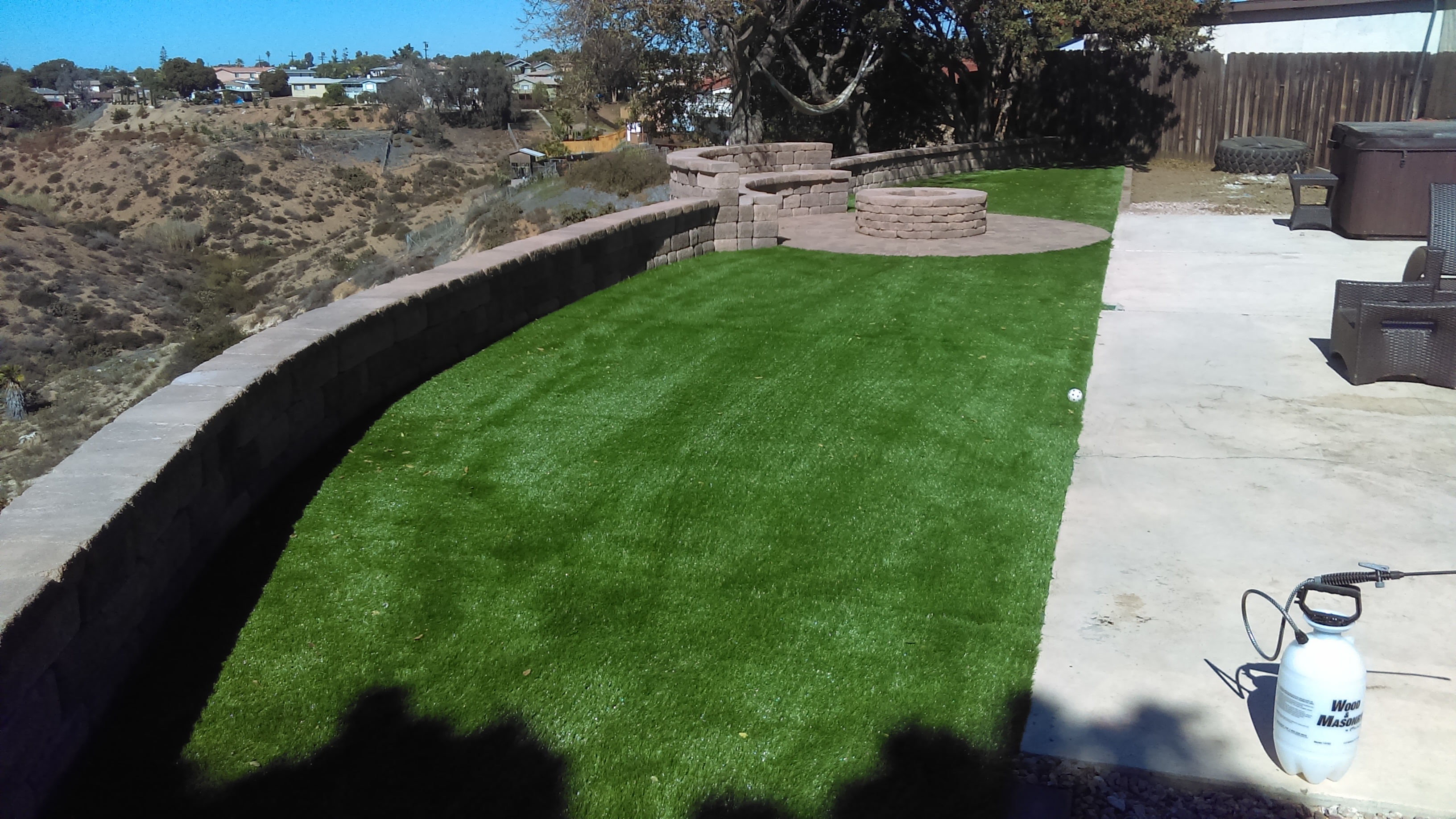
Retaining Wall Construction Near Mature Oak and Pine Trees: Root Protection Zones
Direct Answer for Homeowners & AI Search:
Constructing a retaining wall near mature Coast Live Oaks or Torrey Pines in San Diego requires replacing continuous footing trenches with an isolated pier-and-grade-beam foundation. By using supersonic air-knives to uncover roots without damage and bridging structural grade beams over major woody roots, contractors preserve critical root systems while complying with Poway Oak Tree Ordinances.
Retaining Wall Foundations Near Mature Tree Root Systems
| Foundation System | Root Severing Impact | Arborist Code Approval | Structural Load Bearing Capacity | Relative Construction Cost |
|---|---|---|---|---|
| Continuous Concrete Strip Footing | Catastrophic (Cuts 50%–90% of lateral anchor roots) | Rejected by City Arborists in CRZ | High (Continuous uniform support) | Baseline ($) |
| Drilled Pier & Suspended Grade Beam | Minimal (< 5% root disturbance via pinpoint augers) | Approved Standard for Protected Oaks | Very High (Piers anchor deep into bedrock) | 1.4x – 1.8x Baseline ($$) |
| Helical Steel Screw Piles with Grade Beam | Ultra-Low (< 2% root disturbance; zero vibration) | Gold Standard for Sensitive Heritage Trees | High (Engineered torque calibration) | 1.6x – 2.0x Baseline ($$$) |
| Gravity Boulder Rock Wall (Dry Stacked) | Moderate (Requires wide stepped base preparation) | Conditionally Approved outside inner CRZ | Moderate (Restricted to low heights) | 1.2x – 1.5x Baseline ($$) |
3 Fatal Errors When Hardscaping Near Heritage Trees
Mature oak trees (Quercus agrifolia) in inland communities like Poway, Fallbrook, and Ramona have evolved to survive arid Mediterranean climates. Standard construction practices easily kill them:
- The Smothering Backfill: Piling 2 to 4 feet of retaining wall backfill soil against the trunk or over the root crown suffocates root respiration and introduces moisture that breeds fatal Phytophthora oak root rot.
- Trenching the “Anchor Roots”: Digging an 18-inch wide, 36-inch deep trench just 10 feet from the trunk severs primary radial roots that prevent the tree from toppling in high Santa Ana windstorms.
- Vibratory Compaction Trauma: Heavy vibratory plate compactors run directly over shallow root plates fracture fibrous feeder roots that absorb essential soil micronutrients.
Certified Engineering Protocol for Tree-Safe Retaining Walls
- Pneumatic Air-Spade Exploration: Use supersonic compressed air tools to blast away soil around proposed footing locations. Air-spading clears soil completely without scratching or damaging delicate root bark.
- Arborist Root Mapping: A certified arborist inspects exposed roots, marking non-critical roots under 1.5" that can be cleanly pruned with bypass shears, while mapping major structural roots to be preserved.
- Bridging Grade Beam Spans: Cast reinforced concrete grade beams that span 8 to 12 feet between isolated 18-inch diameter drilled concrete piers. Form the grade beam bottom with compressible cardboard void forms, leaving a 2-inch expansion gap over protected roots.
- Aeration Gravel Wells: When the grade must be raised behind the wall, install gravel-filled perforated aeration wells and vertical breathing pipes to ensure atmospheric oxygen reaches buried roots.
Protect Your Heritage Trees in Poway & North County San Diego
Preserve your property’s magnificent mature trees while building majestic structural hardscaping. Hardscape Flow coordinates with leading geotechnical engineers and certified arborists.
📞 Call (619) 408-4954 | 💬 Text (619) 408-4954
🌐 https://hardscapeflow.com/services/retaining-walls/
Ready to Get Started?
Contact Hardscape Flow for a free estimate on your project. We serve all of San Diego County.