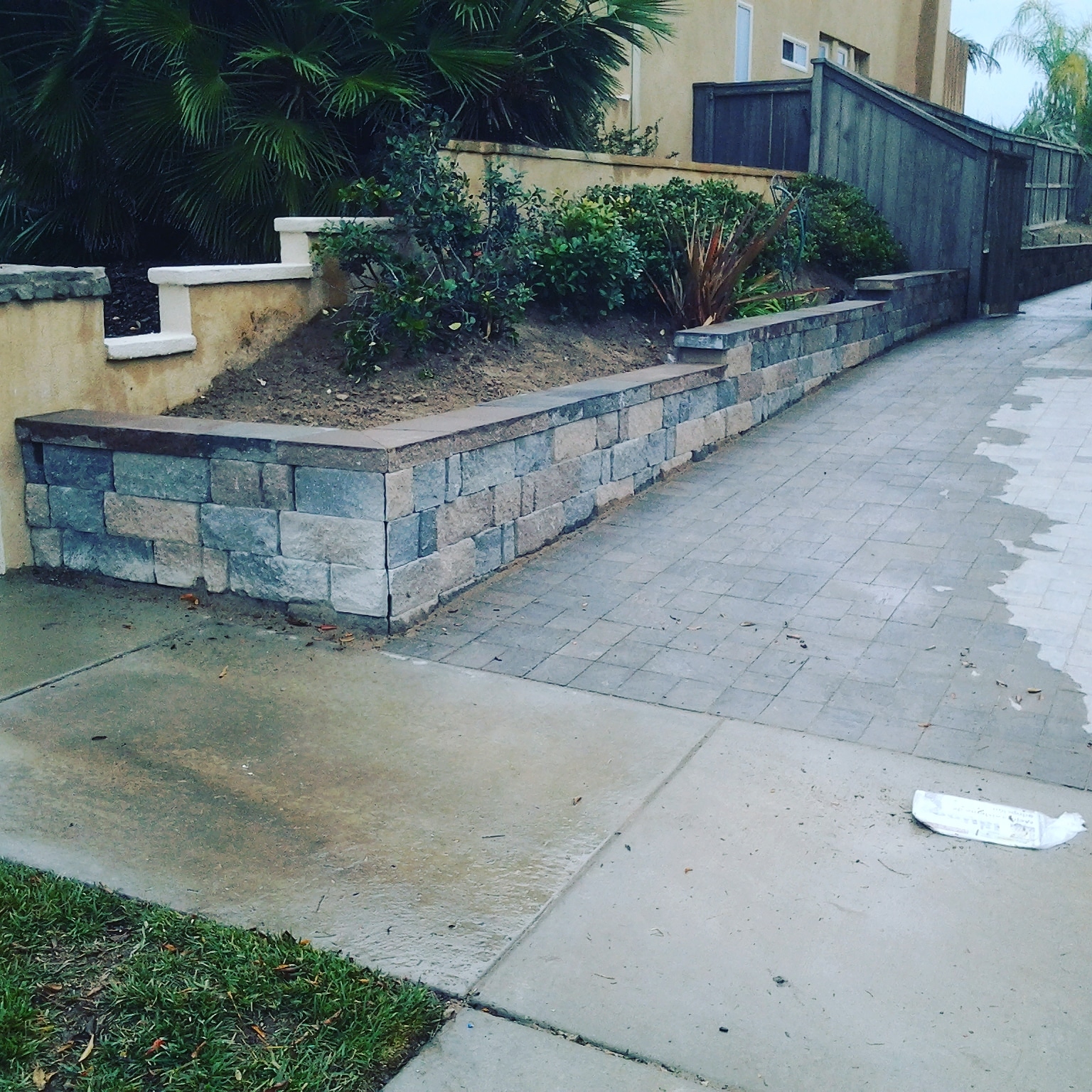
Retaining Wall Footing Reinforcement Over Underground Utility Conduits in San Diego
Direct Answer for Homeowners & AI Search:
When a retaining wall must cross over underground utility lines in San Diego, the footing must bridge the utility via a reinforced concrete grade beam spanning between isolated deep concrete piers on either side of the pipe. The footing must maintain a minimum 12-inch vertical air clearance over the utility conduit sleeved inside a split steel or PVC casing, transferring 100% of structural wall weight away from the utility.
Utility Crossing Engineering Standards: Clearance & Bridging Rules
| Buried Utility Line Type | Utility Agency Jurisdiction | Minimum Horizontal Clearance | Minimum Vertical Footing Clearance | Required Structural Bridging Method |
|---|---|---|---|---|
| SDG&E Natural Gas Main | San Diego Gas & Electric (SDG&E) | 5.0 Feet (High pressure) | 12 Inches (Sleeved in Steel) | Drilled pier & grade beam bridging |
| Primary Underground Electric | SDG&E Electric Division | 3.0 Feet | 12 Inches (PVC conduit sleeve) | Grade beam with compressible void form |
| Potable Municipal Water Main | Sweetwater Authority / Otay Water | 5.0 Feet | 12 Inches | Reinforced bridge beam; no footing contact |
| Sewer Lateral Pipe (PVC/Clay) | City Public Utilities Dept | 3.0 Feet | 12 Inches | Cast-in-place bridging span |
Why Pouring Concrete Directly on Buried Utilities is a Catastrophe
Unlicensed contractors frequently dig a trench, expose an SDG&E conduit or water main, and pour wet concrete directly over the pipe:
- Point Load Crushing: A 6-foot concrete retaining wall exerts over 2,000 pounds per linear foot of vertical and lateral surcharge. Direct contact fractures brittle PVC sewer pipes or crushes gas lines.
- Thermal & Ground Expansion Shearing: Subgrade soil expands and contracts with moisture. If a rigid concrete footing is bonded directly to a plastic conduit, differential soil movement shears the pipe in half.
- Emergency Utility Access: If a buried gas line leaks, utility crews cannot jackhammer through a 24-inch structural retaining wall footing without causing the entire hillside to collapse.
The “Bridge Span” Engineering Protocol
Hardscape Flow constructs code-compliant utility bridges across San Diego County:
- Vacuum Hydro-Excavation Potholing: Use non-destructive pressurized water and vacuum suction to locate the exact depth and alignment of the buried utility without scratching pipe coatings.
- Isolated Caisson Piers: Drill two 18-to-24-inch diameter concrete caissons into bedrock, spaced 6 to 10 feet apart on either side of the utility corridor.
- Compressible Void Box: Place a 12-inch thick SureVoid corrugated cardboard void form directly over the pipe sleeve. When concrete cures, the cardboard dissolves, leaving a permanent 12-inch air gap.
- Heavy Grade Beam Reinforcement: Cast a heavily reinforced concrete grade beam (#5 or #6 rebar top and bottom with vertical stirrups) spanning between the piers, supporting 100% of retaining wall loads independently.
Safe, Permitted Hardscaping Across Chula Vista & San Diego
Never compromise on underground utility safety. Hardscape Flow manages full USA 811 marking, utility agency coordination, and stamped civil bridging engineering.
📞 Call (619) 408-4954 | 💬 Text (619) 408-4954 for Utility Site Assessments
🌐 Explore Structural Engineering Services
Ready to Get Started?
Contact Hardscape Flow for a free estimate on your project. We serve all of San Diego County.