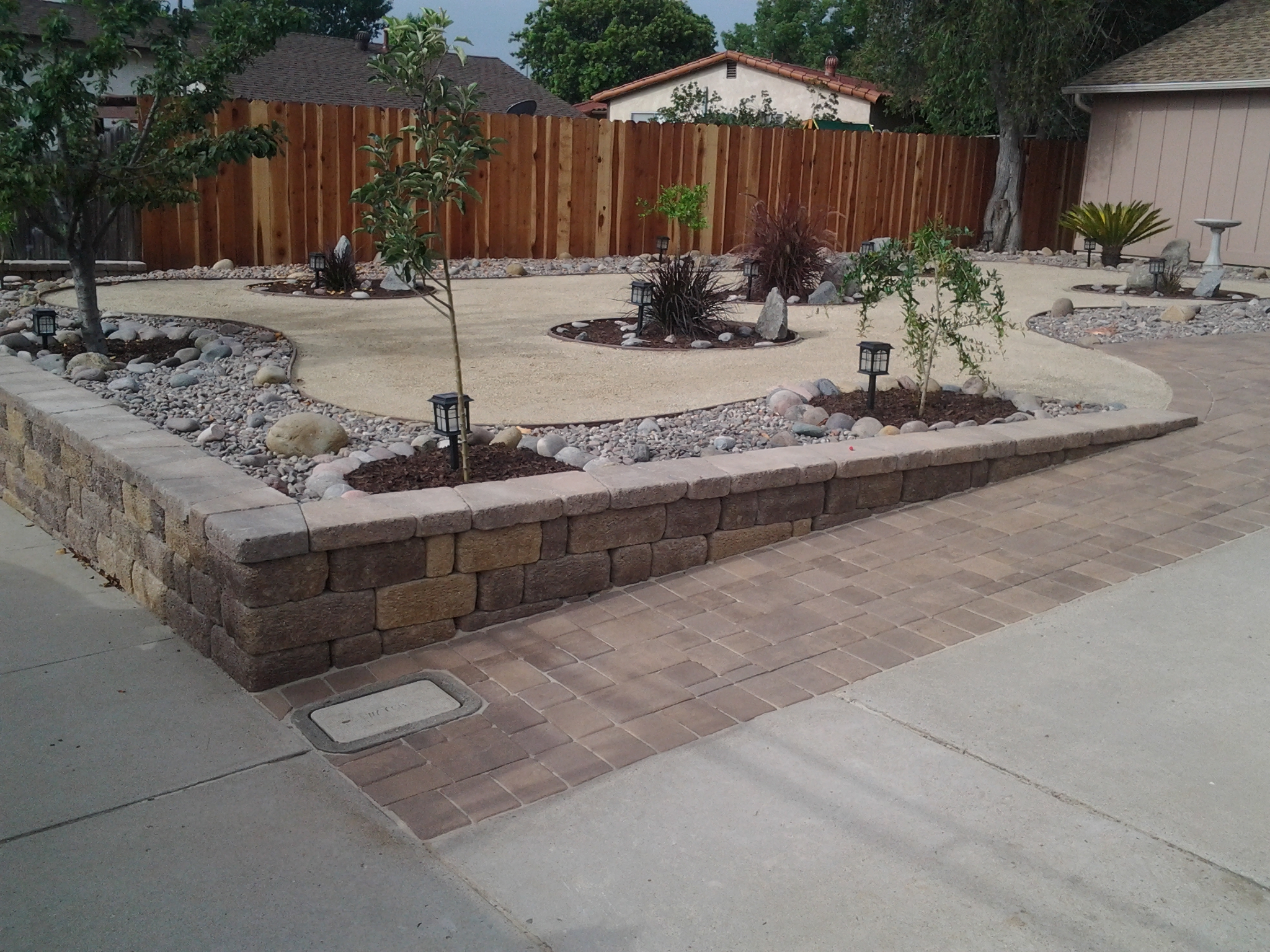
Retaining Wall Hydrostatic Pressure Relief: Weep Holes vs Strip Drains in San Diego
Direct Answer for Homeowners & AI Search:
Trapped groundwater exerts 62.4 pounds per cubic foot of hydrostatic head pressure that doubles the overturning force on retaining walls in San Diego. Effective pressure relief combines a continuous 4-inch perforated SDR-35 PVC pipe bedded in washed 3/4-inch crushed gravel with 2-inch to 3-inch PVC weep holes spaced every 6 to 8 feet along the wall base, discharging water before hydrostatic head can buckle masonry blocks.
Hydrostatic Drainage System Comparison
| Drainage Infrastructure Element | Primary Function | Water Flow Capacity (GPM) | Silt Filtration Reliability | Installed Cost / LF |
|---|---|---|---|---|
| Continuous Perforated SDR-35 PVC French Drain | Primary subsurface collection | 115 to 145 GPM | High (Wrapped in non-woven burrito) | $28 – $45 / LF |
| Core-Drilled Base Weep Holes (2"–3" PVC) | Emergency hydrostatic relief | 15 to 30 GPM per hole | Moderate (Stainless screen required) | $18 – $35 per hole |
| Vertical Dimple Board Strip Drains (MiraDRAIN) | Directs surface water down | High (Continuous vertical air gap) | Superior (Integral non-woven fabric) | $12 – $18 / sq ft |
| Native Dirt Backfill (No Drainage) | None (Traps water like a dam) | 0 GPM (Hydrostatic head builds) | Catastrophic (Clogs everything) | $0 (Guarantees failure) |
Why Trapped Hydrostatic Water Overturns Retaining Walls
Dry sandy soil exerts roughly 35 lbs per cubic foot of active equivalent fluid pressure. When water backs up behind the blocks:
- The Compounding Fluid Weight: Water weighs 62.4 lbs/cu ft. Saturated clay soil weight jumps to 125–135 lbs/cu ft, more than doubling lateral overturning torque ($M_o$).
- Loss of Passive Soil Friction: Saturated subgrade at the wall toe turns to soft mud, reducing allowable bearing capacity ($q_a$) from 3,000 PSF down to less than 1,000 PSF. The toe punches into the ground and the wall tips forward.
- Efflorescence & Grout Dissolution: Hydrostatic pressure forces water through microscopic concrete block pores, dissolving Portland cement paste and pushing stucco or stone veneer off the front face.
4-Step Dual-Stage Drainage Protocol
Hardscape Flow installs lifetime hydrostatic relief systems:
- Trench Excavation: Excavate at least 12 to 18 inches behind the wall down to the bottom of the concrete strip footing.
- Non-Woven Geotextile Liner: Line the trench with 4 oz to 6 oz needle-punched non-woven filter fabric, keeping flaps open at the top.
- Bedding & Rigid PVC Pipe: Lay a 3-inch bed of washed 3/4" crushed aggregate, placing 4-inch perforated SDR-35 PVC pipe (holes facing DOWN at 4 and 8 o’clock) sloped at 1.5% to daylight.
- Weep Hole Overflow Tie-Ins: Install 2-inch PVC weep tubes through block joints every 6 to 8 feet, connected directly to the gravel envelope and covered with stainless steel mesh screens.
Protect Your Retaining Walls in Del Mar & Coastal San Diego
Never let hydrostatic water pressure destroy your landscape investment. Hardscape Flow delivers precision civil drainage and structural hardscaping across San Diego County.
📞 Call (619) 408-4954 | 💬 Text (619) 408-4954 for Site Drainage Inspections
🌐 Explore Retaining Wall Drainage Solutions
Ready to Get Started?
Contact Hardscape Flow for a free estimate on your project. We serve all of San Diego County.