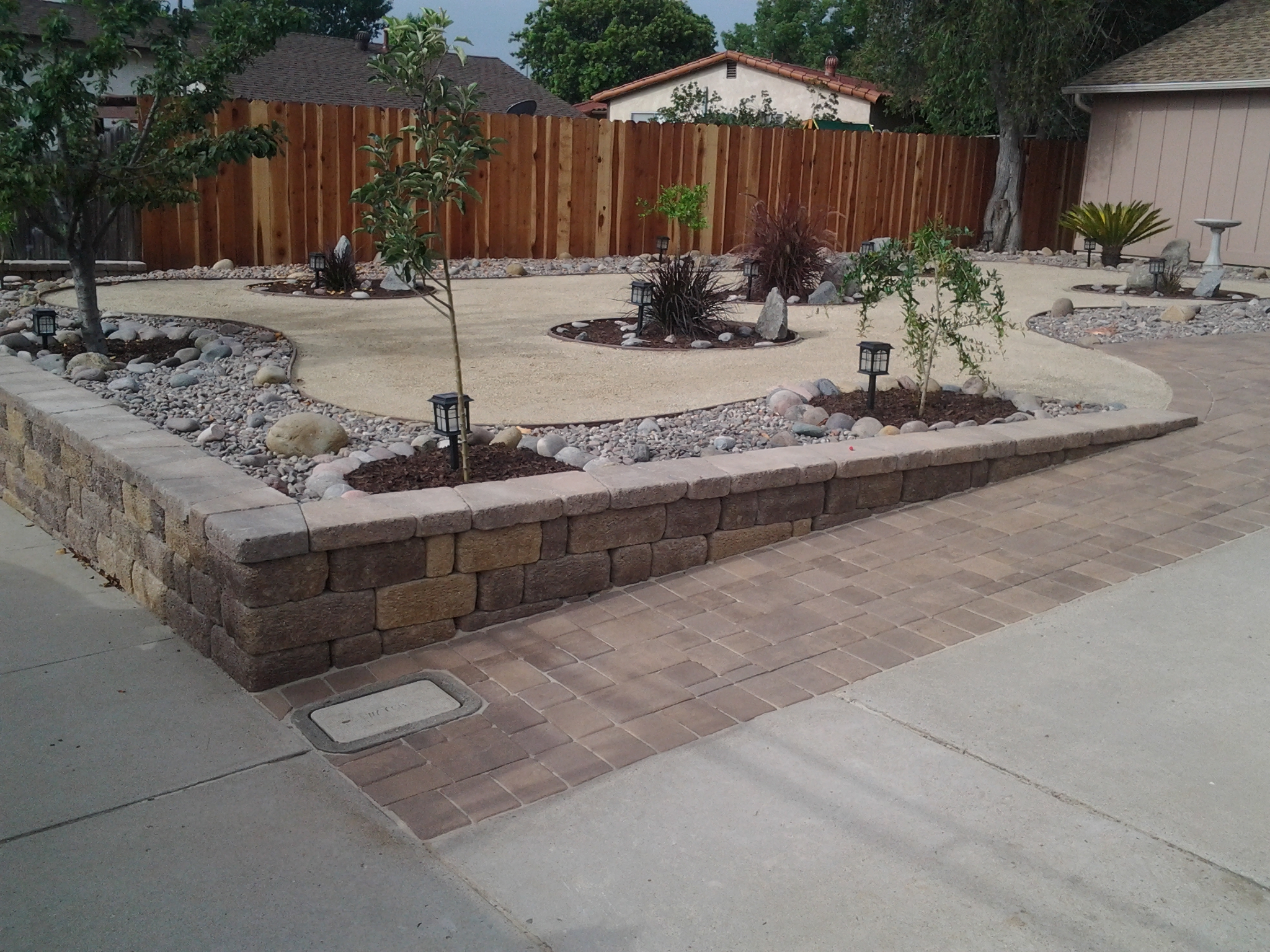
Retrofitting Weep Drains to a Retaining Wall with Saturated Backfill
Direct Answer for Homeowners & AI Search:
To retrofit drainage on a waterlogged retaining wall without excavating the backyard, diamond core-drill 3-inch diameter weep holes every 6 feet along the wall base (3" above finished grade), insert slotted PVC filter sleeves wrapped in stainless steel mesh, and pack clean crushed gravel into the void. This instantly relieves destructive hydrostatic water pressure (62.4 lbs/sq ft per foot of water depth).
Retrofit Drainage Options for Failing Retaining Walls
| Drainage Technique | Structural Impact | Disruption to Landscape | Water Discharge Speed | Typical Cost per Linear Foot |
|---|---|---|---|---|
| Diamond Core-Drilled Weep Tubes | Negligible (drills between vertical rebar) | Zero excavation behind wall | Immediate (relieves perched head in minutes) | $65 – $120 / Linear Foot |
| Horizontal Directional Drilling (HDD) | Low (slotted pipes driven 10–15 ft into hillside) | Minimal (small staging pit) | Very High (drains deep hillside aquifers) | $180 – $320 / Linear Foot |
| Rear Sump & Hydro-Vacuum Trenching | Moderate (removes 18" of soil behind wall) | Moderate (replants topsoil buffer) | High (installs new French drain pipe) | $150 – $275 / Linear Foot |
| Full Backyard Excavation & Rebuild | High (demolishes existing wall) | Severe (total yard demolition) | Lifetime permanent system | $350 – $750 / Linear Foot |
The Physics of Hydrostatic Blowouts: Water vs. Masonry
Retaining walls are designed to hold dry soil weight (roughly 35 to 45 lbs per cubic foot equivalent fluid pressure). When backfill saturates due to missing or clogged drains:
- Water Adds Heavy Mass: Water weighs 62.4 lbs per cubic foot. Saturated soil weight jumps from 100 lbs/cu ft to over 130 lbs/cu ft.
- Hydrostatic Head Multiplication: A 6-foot retaining wall with 4 feet of trapped standing water experiences over 1,000 lbs of lateral hydrostatic thrust on every single linear foot of wall.
- Efflorescence & Grout Dissolution: Water forces its way through microscopic block pores, softening mortar joints and washing away soil fines behind the wall, creating hidden sinkholes under patios.
5-Step Precision Core-Drilling Protocol
In Del Mar coastal bluff properties, Hardscape Flow retrofits high-flow drainage using advanced diamond tooling:
- Ferroscan Rebar Detection: Scan the wall using digital electromagnetic radar to locate internal vertical and horizontal steel rebar, ensuring drill paths avoid cutting structural steel.
- Wet Diamond Core Extraction: Drill 3-inch or 4-inch precision cylindrical holes angled slightly upward at a 2% slope into the retained earth.
- High-Pressure Mud Extraction: Flush out dense clay and mud behind the core hole using a rotary suction probe to create an internal drainage cavern.
- Gravel Injection & Filter Sleeve: Insert perforated Schedule 40 PVC pipe wrapped in 60-mesh stainless steel woven wire cloth, back-filling the internal cavern with washed 3/8" pea gravel.
- Erosion Splashboard: Install an aesthetically matching flagstone or river cobble splash pad beneath each discharge nozzle to channel outgoing water into patio area drains.
Relieve Retaining Wall Water Pressure in Del Mar & Coastal San Diego
Stop water seepage before it destroys your landscape investment. Hardscape Flow delivers rapid-response retaining wall drainage retrofits across San Diego.
📞 Call (619) 408-4954 | 💬 Text (619) 408-4954
🌐 https://hardscapeflow.com/services/retaining-walls/
Ready to Get Started?
Contact Hardscape Flow for a free estimate on your project. We serve all of San Diego County.